TECHNICAL ANALYSIS
RSI Explained: How I Use It to Confirm Every Trade
Most traders use RSI wrong. Here is how I actually use it.
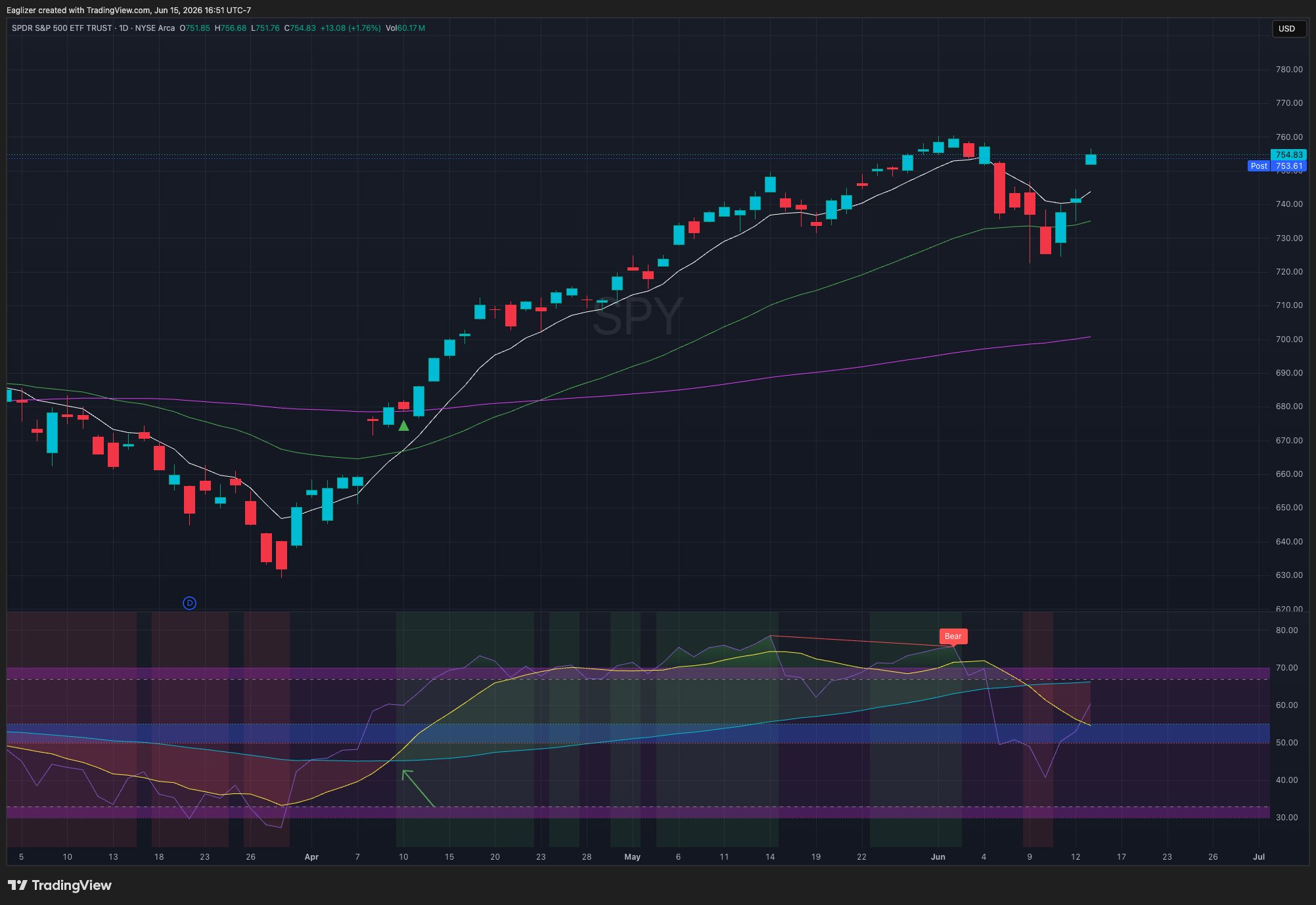
Most traders use RSI wrong. They see it cross above 70 and immediately think "sell." They see it drop below 30 and think "buy." Then they get run over by the trend and wonder what happened.
RSI is not a reversal signal. It is a momentum confirmation tool. When I built my own RSI indicator for TradingView, I designed it specifically around this idea: filter out weak momentum, highlight strong setups, and flag divergence automatically so nothing gets missed.
Here is how it works and how I use it.
What RSI Is Actually Measuring
RSI stands for Relative Strength Index. It measures the speed and magnitude of recent price changes on a scale of 0 to 100. I run it at the standard 14 period setting on close.
The number tells me who has been winning the recent battle between buyers and sellers. Above 50 means buyers have had the edge. Below 50 means sellers. Simple as that.
The Zones That Matter
I do not use the standard 70/30 overbought/oversold levels as trade signals. Those are mean reversion levels. Useful if you are fading extremes, not if you are trading with the trend.
My indicator draws two key lines.
55 is the Bull Line shown in green. RSI needs to be above 55 for me to consider a long trade. This tells me buyers are genuinely in control, not just temporarily bouncing.
50 is the Bear Line shown in red. RSI needs to be below 50 for me to consider a short. Sellers have taken over.
The zone between 50 and 55 is no man’s land. I do not trade in it. If RSI is sitting in there, momentum has not committed to either side and I wait.
The indicator also keeps the 70/30 levels with gradient fills, green above 70 and red below 30, as visual context for when RSI is at an extreme. Those are reference points, not entry signals.
The MA Cloud
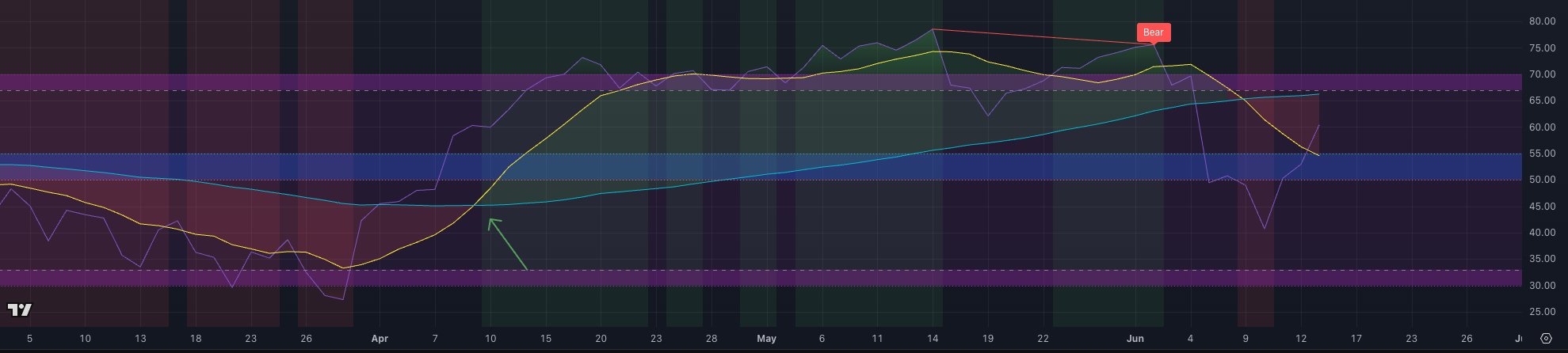
On top of the raw RSI line, my indicator plots two moving averages directly on the RSI. A 9 period SMA shown in yellow, and a 50 period SMA shown in aqua.
The cloud between them turns green when the fast MA is above the slow MA, and red when it is below. This gives me a second layer of momentum confirmation.
The background highlight is the strictest signal on the chart. It only lights up green when all of these are true at the same time: the cloud is green, RSI is above 55, RSI is above the 9 SMA, and RSI is above the 50 SMA. The moment RSI drops below either MA, the green background shuts off even if RSI is still above 55. No exceptions.
The same logic applies on the short side. The background turns red only when the cloud is red, RSI is below 50, and RSI is below both MAs simultaneously.
This makes the background highlight the highest conviction signal on the indicator. When it is green, everything is aligned. When it turns off, something has broken down and I start paying closer attention to my stop.
Divergence Built Right Into the Chart
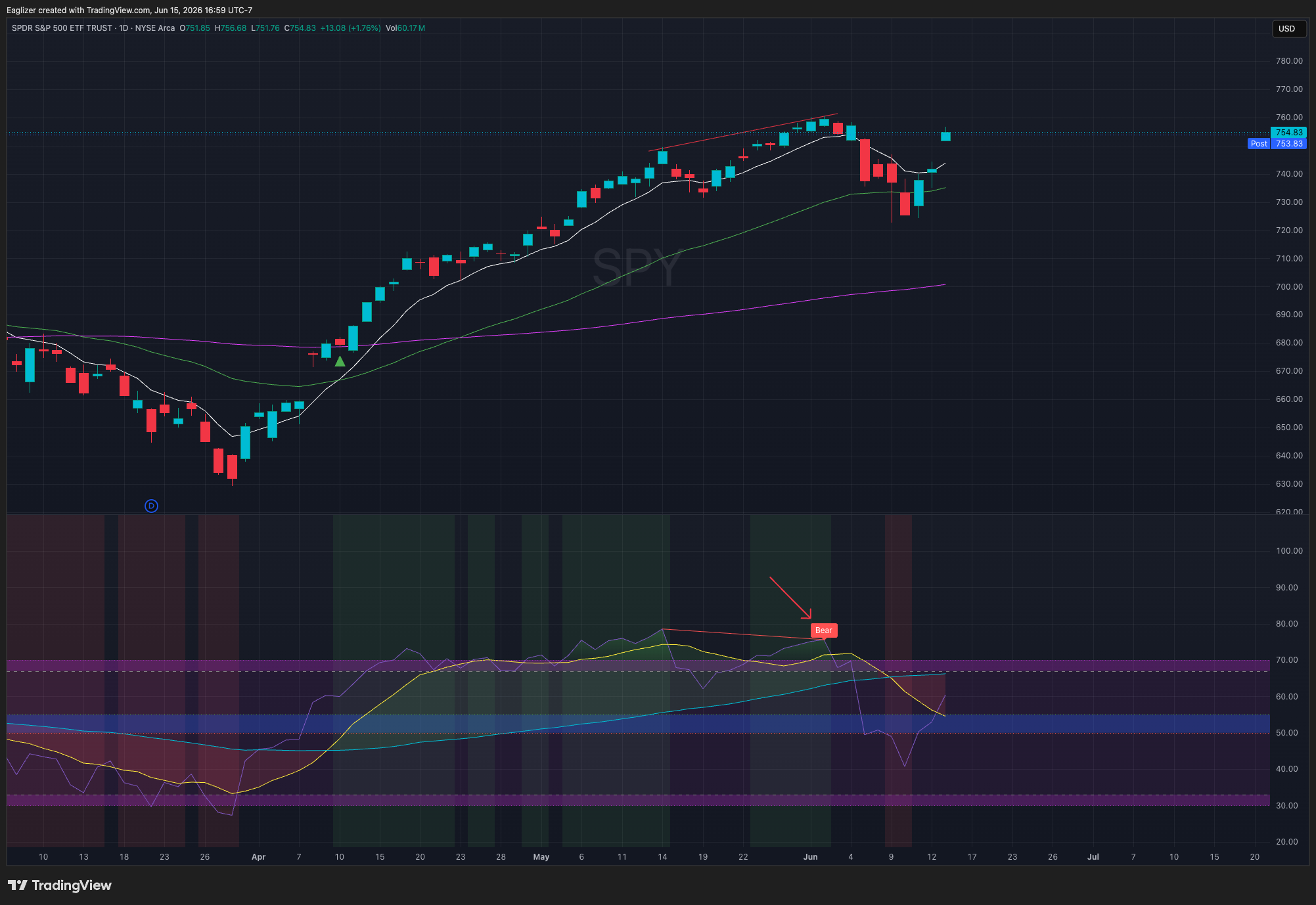
The indicator automatically detects and labels divergence so I never have to hunt for it manually.
Regular bearish divergence: price makes a higher high but RSI makes a lower high. Momentum is weakening even as price pushes up. The chart prints a Bear label directly on the RSI panel.
Regular bullish divergence: price makes a lower low but RSI makes a higher low. Selling pressure is drying up. The chart prints a Bull label.
I do not trade divergence as a standalone signal. But when I am already watching a key Fibonacci level or a major support zone and a divergence label prints, my conviction goes up significantly. It is confirmation that momentum is shifting at exactly the level I was watching.
How This Fits the Full System
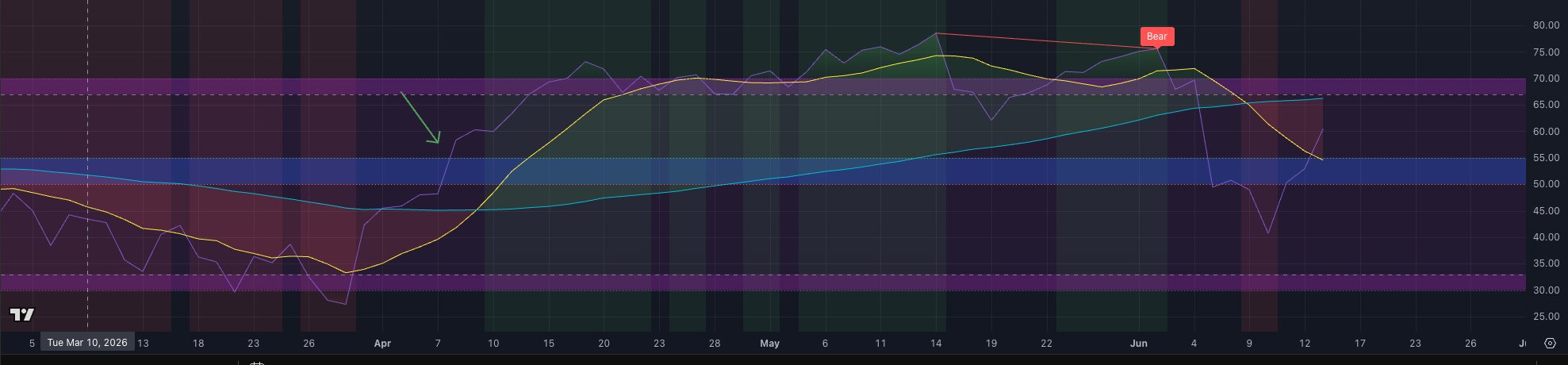
Here is what a complete long setup looks like.
Price is above the 99 SMA. The 8 EMA has crossed above the 34 EMA. Price has pulled back into a Fibonacci retracement zone. RSI 14 is above 55, the MA cloud is green, and the background is lit up green.
That is the full picture. Each piece confirms the others. If RSI is below 55 or the cloud is still red, I do not take the trade regardless of how clean everything else looks.
The RSI is the last gate. Everything else can line up perfectly, but if momentum is not confirmed, I pass.
The Bottom Line
RSI at 14 periods. Bull threshold at 55, bear threshold at 50. MA cloud to confirm the RSI trend direction. Divergence labels to catch momentum shifts at key levels. Background highlights to make the best environments impossible to miss.
Use it to confirm, not to predict. And never trade the 50 to 55 no man’s land.
Ready to see the full system these rules come from?


Leave a Reply